
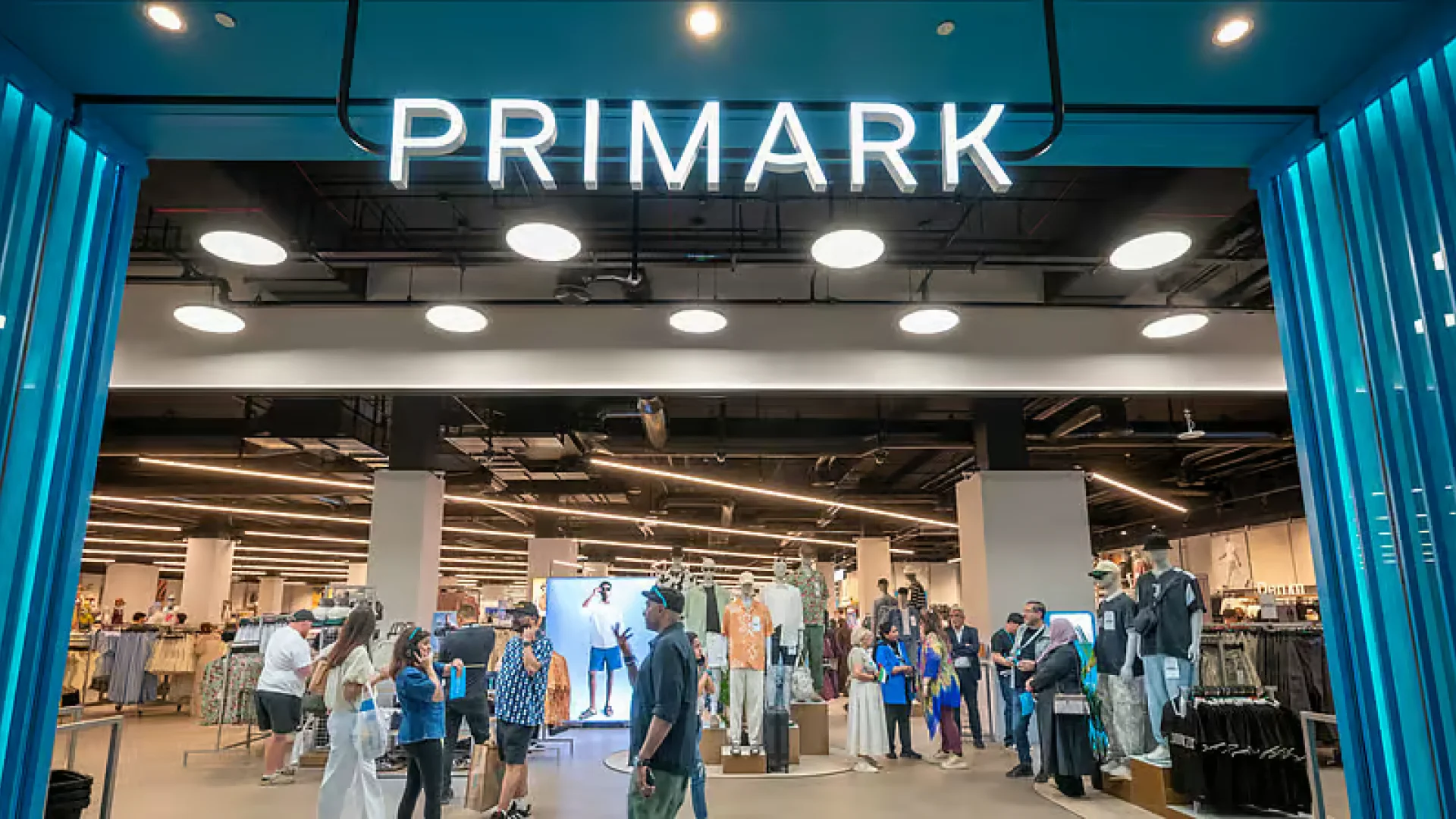

In a city famous for sparkle, a different kind of excitement is here: the thrill of a low price tag. Primark has now opened its third store in Dubai, choosing Mall of the Emirates—one of the emirate’s most iconic retail stages—as its newest address. The move deepens Primark’s UAE footprint and signals how strongly value shopping now shapes Dubai’s mainstream mall culture. For retailers, landlords and investors, it’s a clear message: footfall is the new flex.
The mall is still waking up, but the lights never really went off. At a freshly opened storefront in Mall of the Emirates, you can hear the last small noises of a big opening: a tape gun snapping, a ladder shifting, someone murmuring, “Straighten that table—just a touch.” The air smells faintly of fresh paint and new fabric. Outside, Dubai’s heat leans on the glass. Inside, the temperature is perfect, the floors shine, and the city’s newest retail ripple has just hit.
Primark is now open in Mall of the Emirates, marking its third store in Dubai. Not a pop-up. Not an experiment. A planted flag in one of the region’s best-known shopping destinations—the kind of place where tourists take selfies, families lose track of time, and residents treat errands like a weekend ritual. In a mall that already knows how to pull crowds, Primark’s arrival is less “another shop” and more “new gravity.”
Mall of the Emirates has its own soundtrack: the soft rush of escalators, the steady shuffle of shopping bags, the occasional squeal of a child who has spotted something impossible—snow, indoors, in the desert. It’s a mall built on contrast, and Primark fits that story perfectly. The brand is all about volume, quick wins, and the little adrenaline hit of finding something decent for less than you expected.
With this opening, Primark strengthens its presence in the UAE, expanding beyond its earlier Dubai locations and moving into a venue that delivers constant visibility. The choice is strategic. Primark thrives where people already go in large numbers—and where they’re open to “just a quick look” that turns into a long, bag-heavy loop.
Dubai still does luxury exceptionally well. But walk through the city today and you’ll notice a new kind of confidence: people openly comparing prices, choosing smarter, hunting for deals without apologising for it. Value shopping isn’t a niche; it’s part of the everyday mix. Primark’s proposition—fashion at highly accessible prices—slots neatly into that mood.
There’s a particular scene you can almost script. A couple steps out of a high-end boutique, glances across the corridor, and pauses. “Should we go in?” one asks, half-joking. The other is already nodding. Primark has that effect: it lowers the barrier to entry. You don’t need a special occasion. You don’t need to plan. You just walk in—and suddenly you’re holding three items you didn’t know you wanted.
In mall economics, movement is money. Put a high-frequency retailer in the right spot and the entire building starts to breathe differently. Corridors that were once “in between” become destinations. Neighbouring stores get a new stream of potential customers drifting past their windows, drinks in hand, kids negotiating for a snack, friends comparing finds like trophies.
Primark is famous for exactly that: generating footfall. And footfall does more than fill a store—it feeds the ecosystem. The food court gets busier. The cinema sees more last-minute ticket buys. Beauty kiosks book more walk-ins. Even the practical little shops—phone accessories, quick gifts, travel essentials—pick up impulse sales because people are simply there, longer.
There it is: early afternoon, the mall bright but calm, the kind of light that makes every storefront look like a set. A small crowd forms—not a stampede, more like a collective curiosity. Phones come out. Someone says, “Let’s just go in quickly.” A teenager smirks, because everyone knows that sentence is fiction.
Inside, it’s colour and motion. Tables stacked like friendly chaos. Hangers clicking. The soft crinkle of paper bags. A micro-dialogue floats above the noise: “This is cute.” “Get it.” “In two colours?” “In two colours.” It’s intimate and loud at the same time—the strange social comfort of bargain hunting in public.
A third location is a milestone because it suggests repeatable demand. Staffing, supply chains, rental maths—none of it scales unless the numbers are real. Dubai is a fast-feedback market: brands grow quickly when they fit, and they disappear quickly when they don’t. Primark expanding again implies the fit is strong and the appetite for value fashion is durable.
For Mall of the Emirates, the addition is also a statement of intent. Malls don’t stay relevant by standing still. They curate. They adjust the price spectrum. They protect their footfall by making sure a visit feels worthwhile for different budgets, different ages, different moods. Luxury alone can become a museum; value alone can become generic. The power is in the blend—and Primark is a bold ingredient.
Primark’s arrival in Mall of the Emirates is not only a retail headline—it’s a real estate signal. For investors, it speaks to how Dubai’s prime retail assets are evolving: strengthening resilience with high-volume, value-oriented anchors while maintaining destination appeal. In a world where consumer sentiment can shift quickly, value retailers often act as stabilisers, supporting consistent visitation even when discretionary spending tightens.
1) Footfall supports income stability: For shopping-centre owners, high and repeatable footfall underpins leasing power. More visitors can lift turnover-based rents, reduce vacancy risk, and improve renewal probabilities for surrounding tenants. A Primark store typically draws routine, repeat shoppers—an advantage compared with concepts that rely on occasional “event” spending.
2) Tenant-mix diversification reduces risk: Adding a major value-fashion tenant to a premium mall broadens the customer base and can smooth performance across cycles. For asset managers, this can mean less reliance on any single demographic segment and stronger overall sales density, supporting valuations and financing terms.
3) Spillover effects for adjacent units: High-traffic anchors tend to lift nearby F&B, entertainment, and convenience retail. This can create opportunities for re-leasing at improved terms in “beneficiary corridors,” as well as strategic re-zoning of mall space to capture higher yields per square metre.
4) Implications for nearby residential demand: Stronger retail nodes can enhance the attractiveness of surrounding neighbourhoods for renters and end-users, particularly for expatriates and families who prioritise access to amenities and leisure. However, increased traffic at peak hours can also amplify congestion; buildings with superior access, parking solutions, and noise mitigation may outperform on a relative basis.
5) Development and mixed-use strategy: The move reinforces a broader trend: prime retail is increasingly experience-driven and integrated with food, entertainment, and services. Developers and investors should view such tenant additions as validation of mixed-use, destination-centre strategies—assets that keep people on-site longer tend to capture more spend and defend rents more effectively.
Investor takeaway: A third Primark store—especially in a flagship destination like Mall of the Emirates—indicates durable demand for value retail within Dubai’s premium environments. For real estate capital, it points to potential uplift in footfall-driven income, stronger tenant-mix resilience, and secondary benefits for nearby residential micro-markets, provided infrastructure keeps pace.